Cat First
Food and water
Create the ideal feeding space for your cat by following the principles of comfort and natural needs.
1. Choosing bowls
Material matters. Plastic accumulates bacteria and can cause feline acne. Recommended materials: glass, ceramic, and stainless steel.
2. The ideal location
Cats are creatures of habit and security. Never place food near the litter box.
- A quiet corner free of drafts;
- Away from noisy appliances;
- A view of the room for a sense of safety.
3. A comfortable height
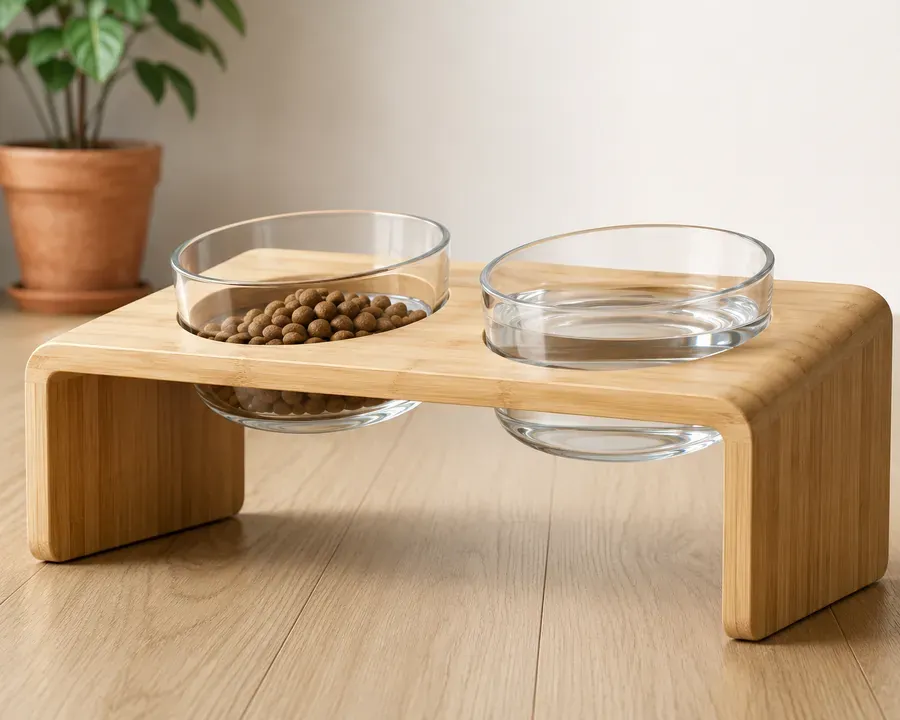
Bowls on a stand reduce strain on the neck and joints, especially in older cats. Tilting the bowl to the correct 15-degree angle makes swallowing more natural. Choose the height based on how tall your cat is while standing.
4Tip: bowl dimensions
Tip
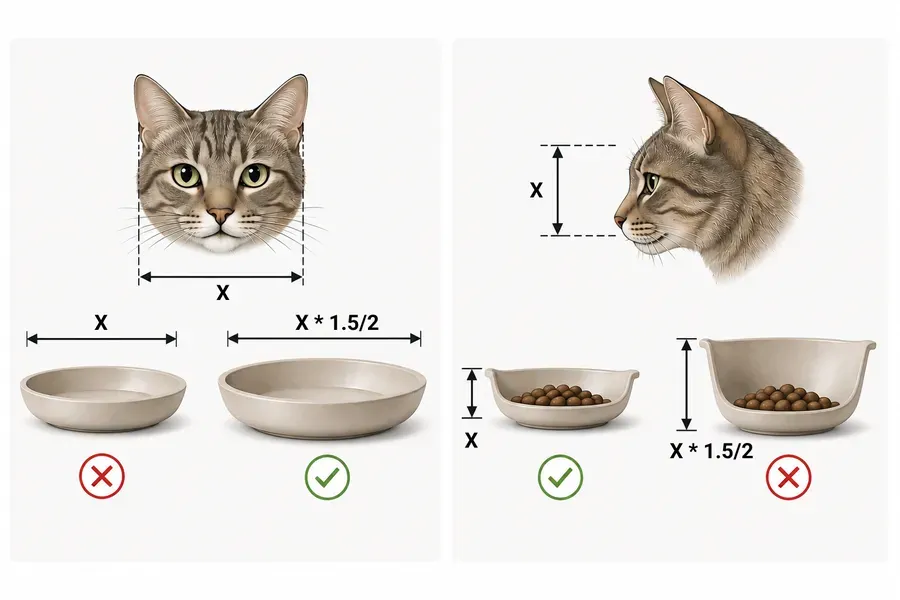
Bowl width: the inner diameter should be at least 1.5–2 times the width of the cat's face (including whiskers). For most adult cats, the optimal diameter is 15–18 cm; for large breeds (such as Maine Coons), 18–22 cm. If the diameter is under 12–13 cm, the cat's whiskers will keep brushing against the sides.
Bowl depth: 2–4 cm is ideal for both dry and wet food. The rim height should be about 1/2–3/4 of the height of the cat's face. Rims taller than 5–6 cm are only suitable for large food volumes and are less convenient for everyday feeding.
More in this section
The information in this app comes from open sources and the experience of cat owners. It does not replace a consultation or an examination by a vet. Decisions about your pet's health and care are the owner's to make — if in any doubt, contact a vet.
All of this is in the Cat First app
Articles, checklists and first aid on your phone, even without internet.