Cat First
Grooming and care
Regular care helps you catch changes in your cat's health early. Most routines take just a few minutes, but it's more important to do them calmly and consistently.
1What to check at home
- eyes — no discharge, excessive tearing, or redness;
- nose — no unusual discharge;
- ears — no strong odor, excessive wax, or constant scratching;
- teeth and gums — plaque, bad breath, redness;
- skin and coat — dandruff, scabs, hair loss, parasites, matting;
- paws and claws — cracks, damage, overly long claws;
- weight and body condition — sudden changes need attention;
- behavior — appetite, activity, sleep, litter box use.
2Daily / periodic care
Daily:
- fresh water;
- normal appetite;
- a clean litter box;
- a quick health check;
- activity and play.
Periodic:
- brushing;
- nail checks;
- teeth cleaning;
- ear and eye checks;
- weight monitoring.
3Important
Caution
Home care doesn't replace a veterinary exam. A new lump, prolonged lethargy, refusal to eat, a sudden change in behavior, constant scratching, or other unusual symptoms are all reasons to see a vet.
4Nail trimming
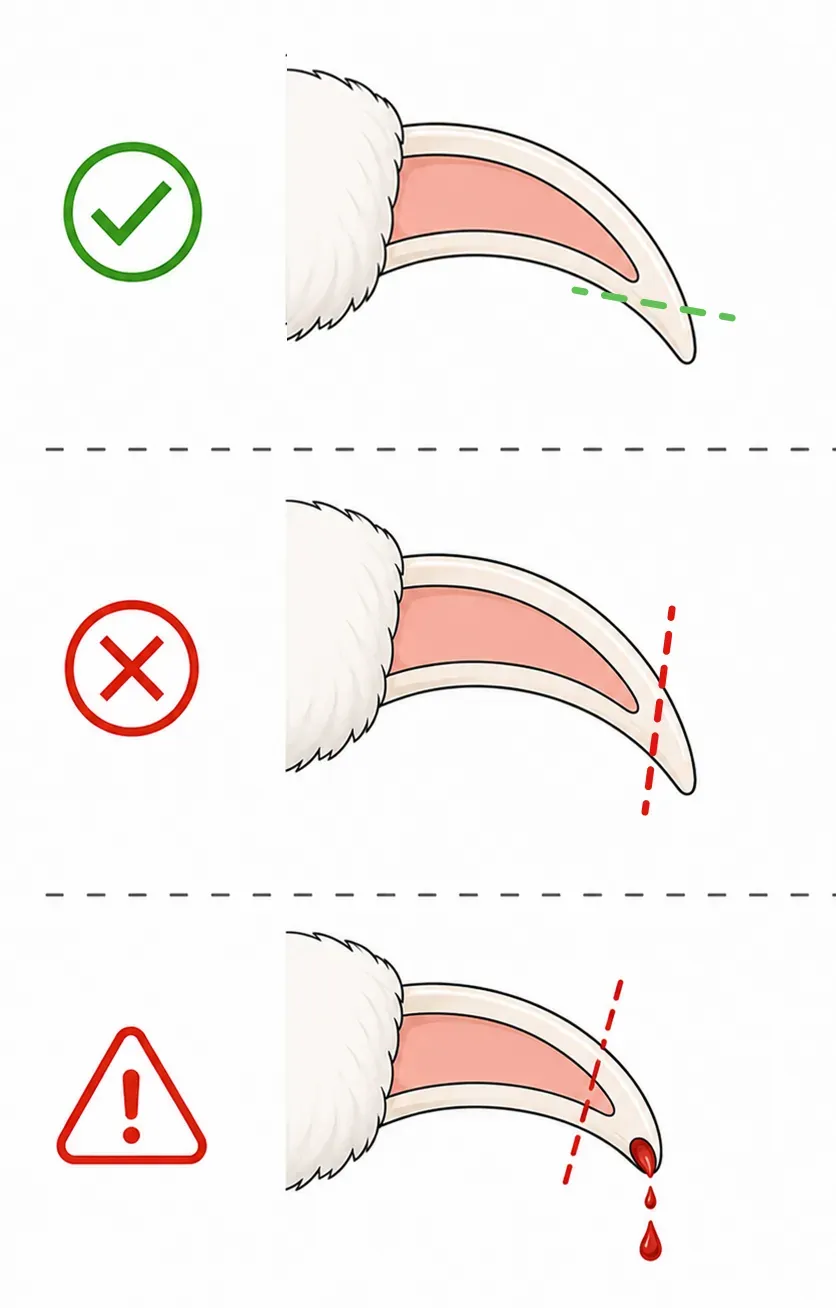
Cats usually don't need their claws shortened by much. The main goal is just to remove the sharp tip, without touching the quick (the living part of the claw).
How to prepare:
- cat nail clippers;
- good lighting;
- a calm location;
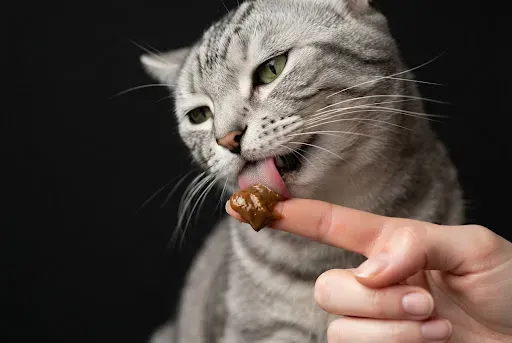
- a treat for after the procedure.
How to trim:
1) let the cat get used to having its paws touched calmly;
2) gently press the paw pad so the claw extends;
3) find the light/pink inner part of the claw;
4) trim only the clear, sharp tip (a couple of millimeters);
5) if the cat gets anxious, do one or two paws and continue later.
How often: check the claws regularly — frequency depends on age, activity level, and whether the cat uses a scratching post. If you accidentally cut into the quick, there may be bleeding and pain — use a styptic product made for animals, and don't force the procedure to continue. Scratching posts remain an important part of a cat's natural claw care and behavior.
5Brushing
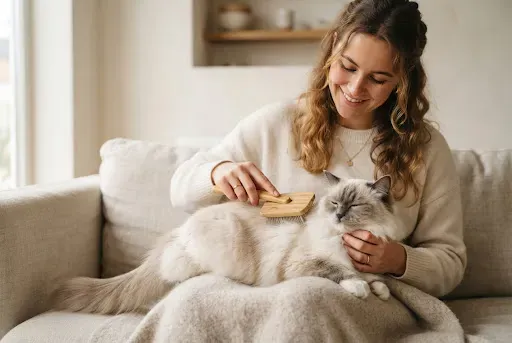
Brushing helps remove loose fur and reduces the amount of hair a cat swallows while grooming itself.
Benefits:
- less shed hair around the house;
- fewer mats;
- easier to monitor skin condition;
- easier to spot parasites, irritation, and wounds;
- especially useful for long-haired cats.
How to choose a tool:
- short coat — a soft brush or rubber grooming glove;
- medium coat — a brush with appropriately spaced teeth and a comb;
- long coat — a comb and brush that can gently work through the fur down to the roots.
More in this section
The information in this app comes from open sources and the experience of cat owners. It does not replace a consultation or an examination by a vet. Decisions about your pet's health and care are the owner's to make — if in any doubt, contact a vet.
All of this is in the Cat First app
Articles, checklists and first aid on your phone, even without internet.