Cat First
Activity
Movement is the key to your cat's health and longevity. Create a space for an active life.
1Daily exercise
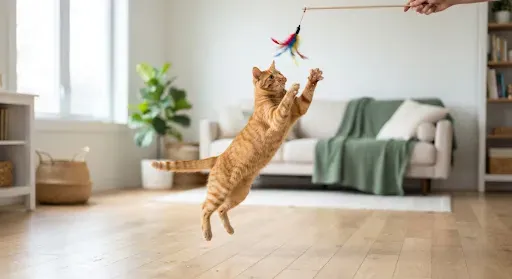
Regular play sessions (15–30 minutes a day) help prevent obesity and maintain muscle tone. Use wand toys and laser pointers to mimic hunting.
Benefits:
- reduces stress;
- decreases nighttime activity;
- prevents destructive behavior;
- helps control weight;
- satisfies the hunting instinct.
2Vertical routes
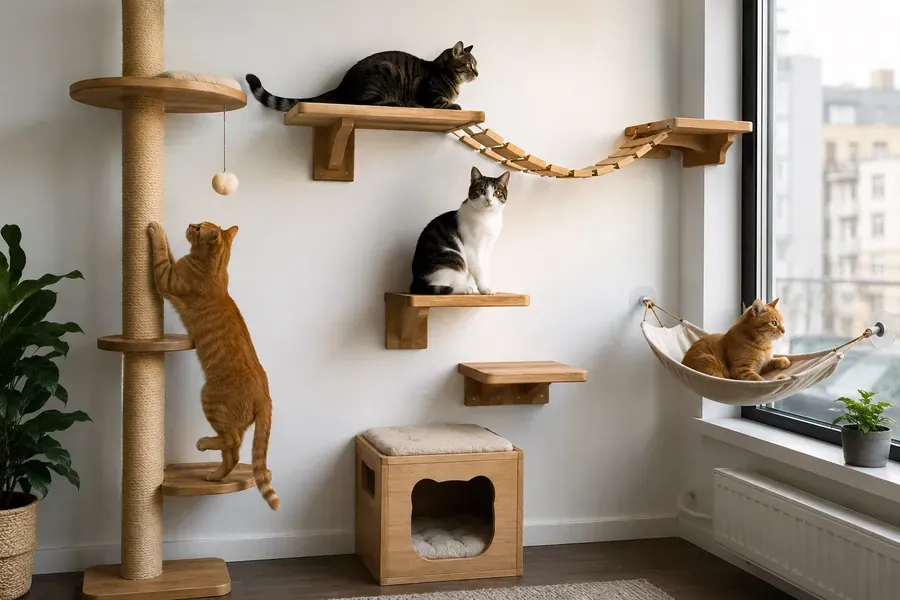
Using cat trees and wall-mounted steps lets a cat act on its climbing instinct and feel safe up high.
What this includes:
- scratching posts at least 80 cm tall;
- wall shelves;
- cat trees;
- window hammocks;
- bridges.
3How to tell your cat needs more playtime
If a cat is bored, it may:
- wake you up at night;
- scratch furniture;
- meow loudly;
- overeat;
- overgroom to the point of bald patches;
- attack your legs.
4The play process
The general cycle: hunt → catch → eat → rest. In other words: play, then give a small treat or portion of food, then let the cat rest. This cycle closely mirrors natural behavior.
1. Searching for prey — move the toy slowly, hide it behind furniture, and let the cat watch and "stalk" it.
2. The chase — vary the speed and direction, mimic the behavior of a bird or mouse, and let the cat sneak up.
3. The catch — don't keep pulling the toy away constantly; let the cat successfully catch the "prey" several times, and allow it to hold and bite it.
How to tell your cat has had enough:
- it rests calmly after play;
- it doesn't demand constant attention;
- it maintains a normal weight;
- it damages furniture less;
- it shows interest in its toys.
5Exercise wheel
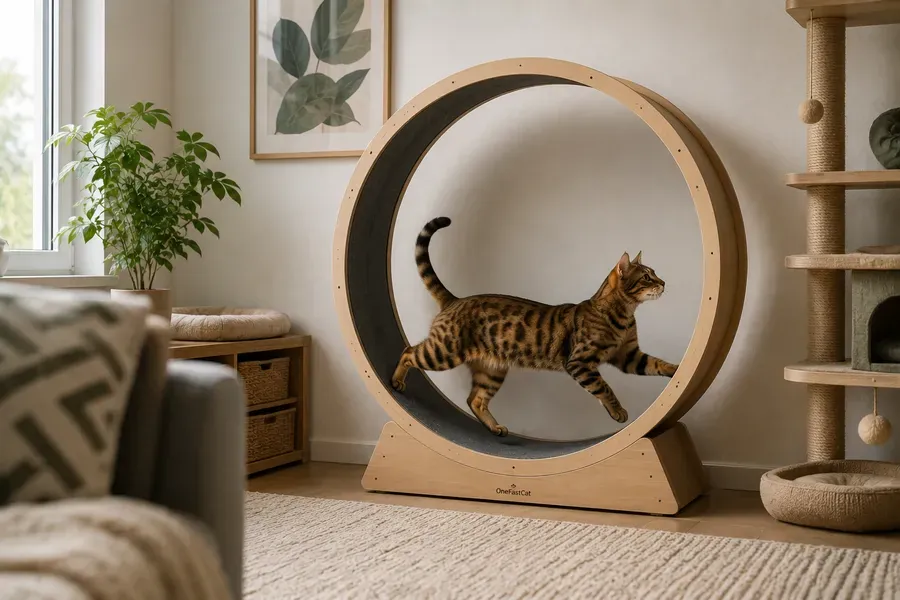
Helps an indoor cat burn energy, especially if it lives in an apartment without free access to the outdoors. A good addition to playtime, but not a replacement for interaction with you.
Benefits:
- reduces the risk of obesity;
- keeps muscles and joints in good condition;
- reduces boredom and stress;
- useful for active breeds (Bengal, Abyssinian, Oriental, Savannah).
Good to know:
- not every cat starts using the wheel right away — some need several weeks to get used to it;
- never force a cat to run;
- encourage interest with treats;
- the wheel should turn smoothly and nearly silently.
6Mental stimulation
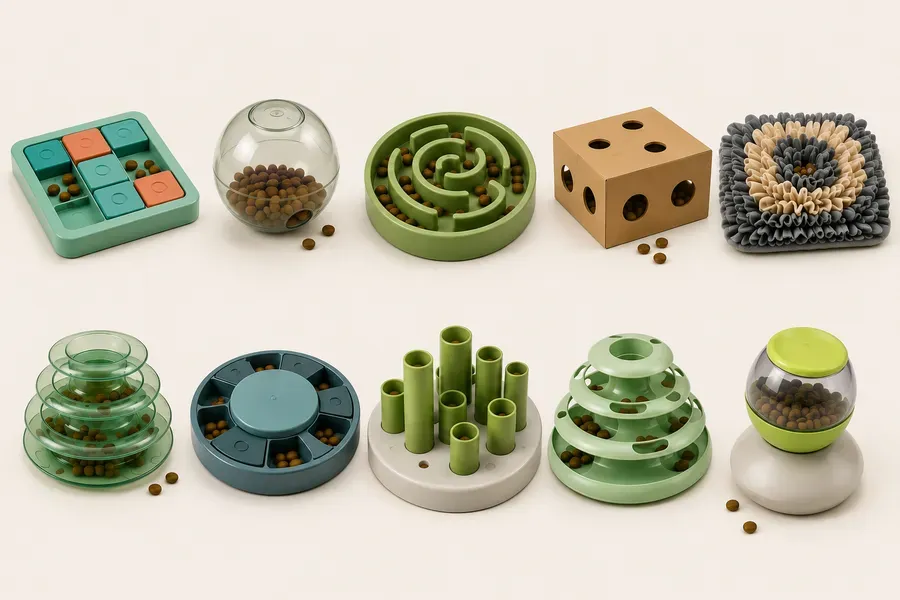
Puzzle feeders and interactive toys make a cat "work" for its food, which mimics natural behavior and prevents boredom.
Examples:
- jars with sliding lids;
- treat-dispensing balls;
- treat mazes;
- boxes with holes;
- snuffle mats.
7Tips
Tip
"Rotate your cat's toys every week. Novelty is the best stimulus for feline curiosity."
Two short 10–15 minute play sessions are better than one long one — this way the cat doesn't get tired too soon and stays interested.
More in this section
The information in this app comes from open sources and the experience of cat owners. It does not replace a consultation or an examination by a vet. Decisions about your pet's health and care are the owner's to make — if in any doubt, contact a vet.
All of this is in the Cat First app
Articles, checklists and first aid on your phone, even without internet.