Cat First
Safety
Your home is a fortress for your cat. Make sure every corner of it is safe and comfortable.

1Window screens
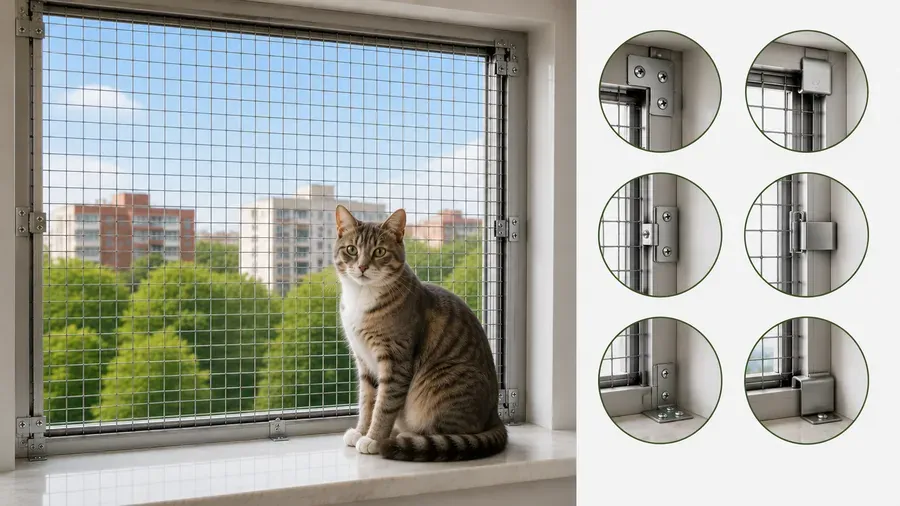
Ordinary mosquito screens won't hold up against a cat's jump or claws. And open windows can lead to a cat getting stuck or falling out.
There are two main types of screens for protecting cats:
1) "Anti-cat screens" — made from high-strength steel mesh and securely attached to the frame with metal fasteners around the entire perimeter.
2) Plastic restrictors for open window gaps — also known as "tilt-and-turn window guards."
2Protecting corners and gaps
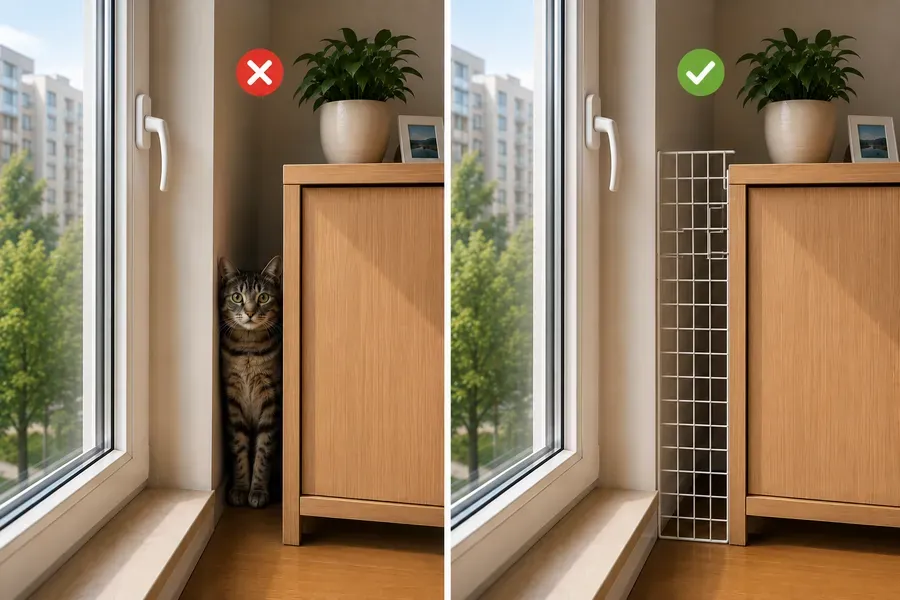
Check the gaps between furniture and walls. Cats can get stuck in narrow spaces. Common spots include:
- between cabinets and the wall;
- behind the refrigerator;
- behind the washing machine;
- between the sofa and the wall.
The simple rule: either the cat shouldn't be able to fit into a space at all, or it must be able to get back out.
3Electricity
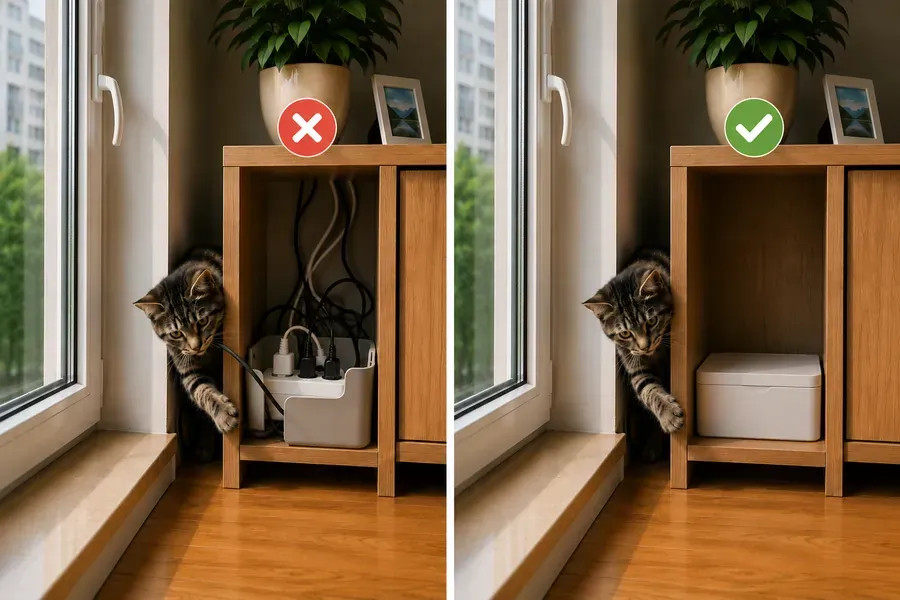
Hide cords in cable covers. Kittens love to chew on cords, which can cause electric shock, death, or burns to the mouth.
Dangerous spots:
- extension cords;
- phone chargers;
- computer cables;
- string lights;
- TV wires.
Using dedicated cable covers to bundle wires together and conceal them really helps.
Keep in mind that cats may chew on cords out of curiosity, because of a smell, or in reaction to a person's behavior. If this happens, don't scare the cat or yell at it — calmly and gently distract it from the cords instead.
4Heavy furniture
Anchor bookshelves and TVs to the wall. Cats are excellent jumpers, and their weight can tip over unsecured items, which can injure the cat or people nearby.
Main items to watch:
- bookcases;
- dressers;
- shelving units;
- TVs;
- wall shelves;
- wine cabinets.
5Household chemicals
Caution
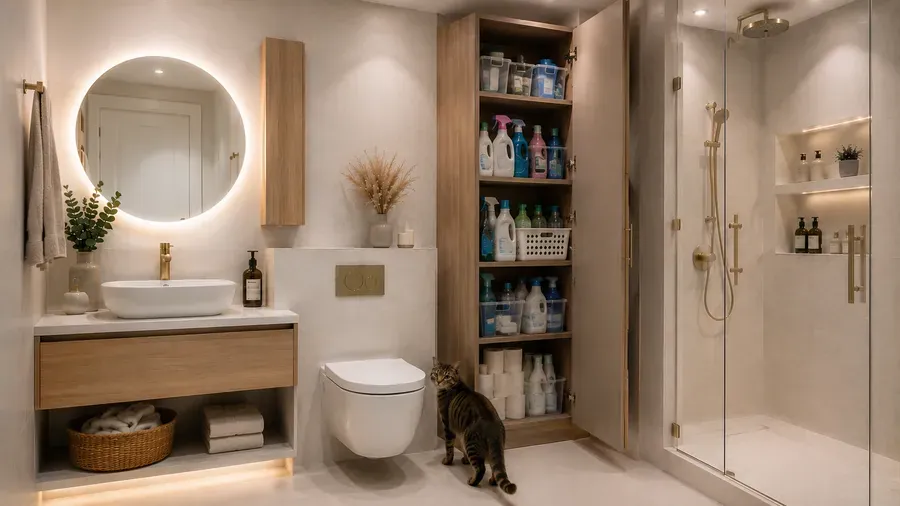
Any household chemical is dangerous for animals. This includes products for:
- cleaning glass;
- cleaning the bathroom;
- washing floors;
- washing dishes, and so on.
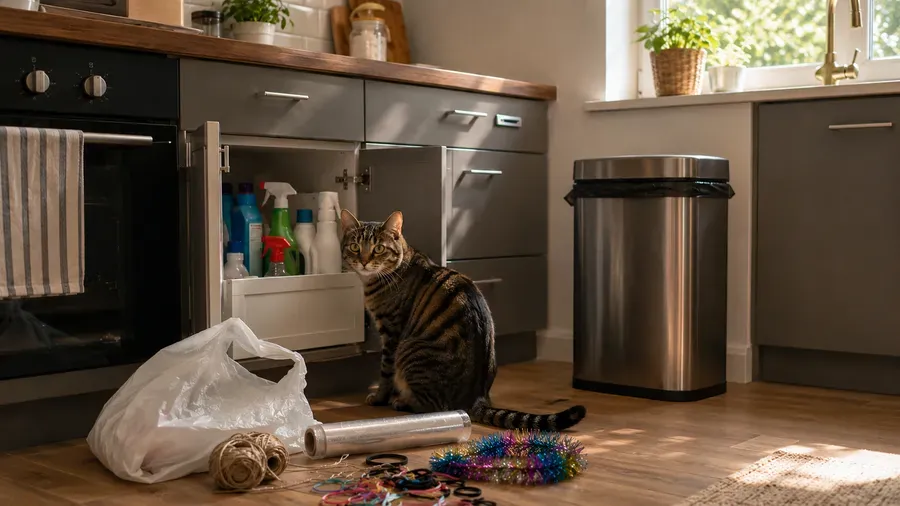
Even if a chemical gets on a cat's fur, the cat will lick it off and it will end up in its internal organs. Keep all products away from your cat's living areas and behind closed cabinet doors.
Especially dangerous: bleach, drain cleaners, oven cleaner, dishwasher tablets, laundry pods, and concentrated cleaning solutions.
6Balcony
Being able to enjoy fresh air is an important part of an animal's life. But besides fresh air and sunshine, a balcony can also hide danger.
The first and most important rule is having dedicated safety netting around the entire perimeter of the balcony. You should also seal off any technical openings — cats are curious and will poke their noses in anywhere they can.

7Additional points
Kitchen:
- a hot stovetop;
- knives;
- an open oven;
- the trash can.
Bathroom:
- keep the toilet lid closed;
- always check the washing machine before starting it;
- keep cabinets closed;
- store pills and capsules securely.
Candles and fragrances:
- essential oils;
- diffusers;
- incense;
- candles.
Bags and film:
- plastic bags;
- packaging film;
- stretch wrap.
Thread and elastics:
- sewing thread;
- embroidery floss;
- rubber bands;
- hair ties.
More in this section
The information in this app comes from open sources and the experience of cat owners. It does not replace a consultation or an examination by a vet. Decisions about your pet's health and care are the owner's to make — if in any doubt, contact a vet.
All of this is in the Cat First app
Articles, checklists and first aid on your phone, even without internet.