Cat First
Sleep and rest: creating the perfect spot
How you organize your space has a direct effect on your pet's physical and mental health.
1General rule: quiet retreats
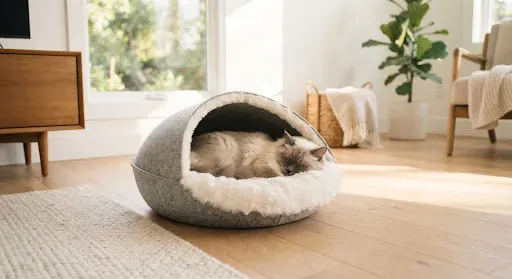
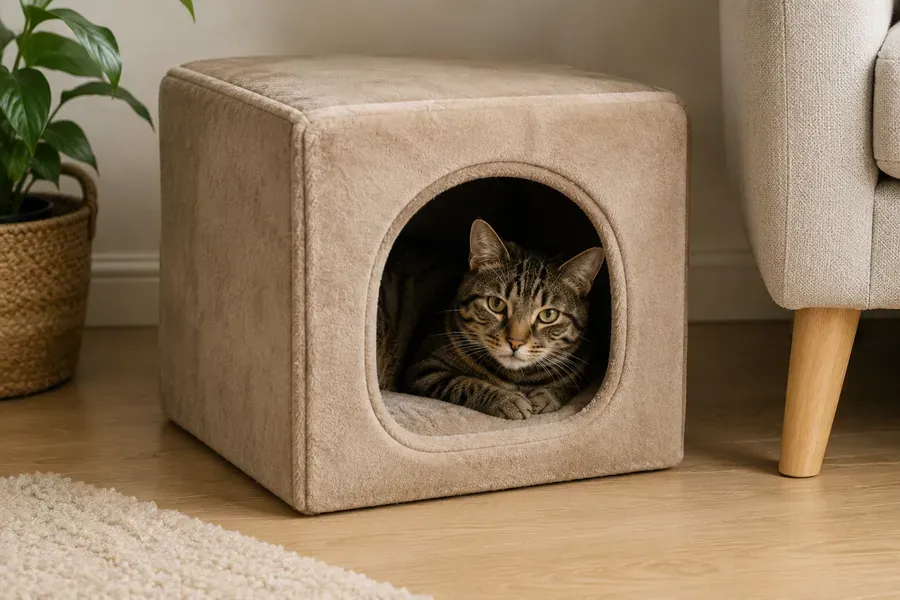
Every cat should have a place where nothing will disturb it: boxes, tunnels, or fleece cocoons.
2A variety of surfaces
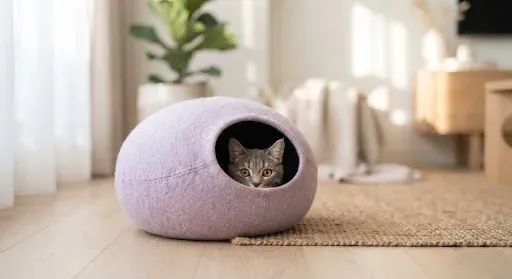
Cats appreciate having options — from soft plush beds to simple cardboard boxes, each spot serving its own purpose at different times of day. Watch to see what your particular cat prefers.
Options: soft beds, boxes, shelves.
3Vertical space
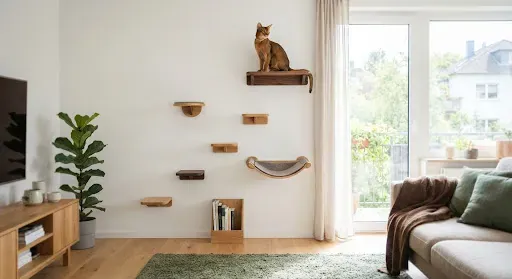
High vantage points let cats keep an eye on their territory, which reduces stress and anxiety. It's important that there are several ways to get to and from this area.
Minimalist wall shelves; multi-level cat activity towers.
4Harmony in a multi-cat household
In a home with multiple pets, the formula for ideal rest is simple: N + 1. The number of beds should exceed the number of cats by one, to avoid competition over resources. And more — spread across different spots — is even better.
5Types of beds
Enclosed cave beds — ideal for cats that prefer to hide away while resting.
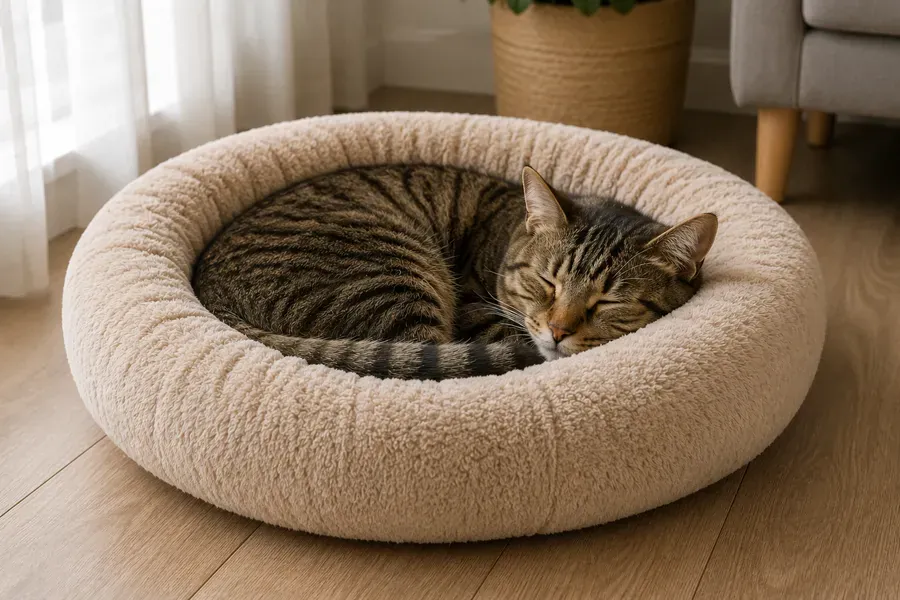
Beds with raised edges — soft baskets with high sides, ideal for cats that like to curl up into a ball while sleeping.
Hammocks — hanging setups mounted to radiators, chair legs, or windows; a favorite spot for active pets that prefer resting up high.
Mats and pads — flat, portable bedding, suited to larger cats or ones that like to sleep stretched out.
Cushion beds — square or rectangular soft options for everyday use.
More in this section
The information in this app comes from open sources and the experience of cat owners. It does not replace a consultation or an examination by a vet. Decisions about your pet's health and care are the owner's to make — if in any doubt, contact a vet.
All of this is in the Cat First app
Articles, checklists and first aid on your phone, even without internet.